Lifeline Offline Emergency Communication Redesign
The Result: SOS works with zero cell signal. When a phone finds a connection, alerts reach rescuers in under 60 seconds. Boat dispatch coordination is about 75% faster. Private home addresses stay blurred on public maps.
The Problem: In floods and storms, towers fail and emergency hotlines go dark. People post scattered social alerts. Rescue boats wait on unclear locations. Public maps can expose private addresses.
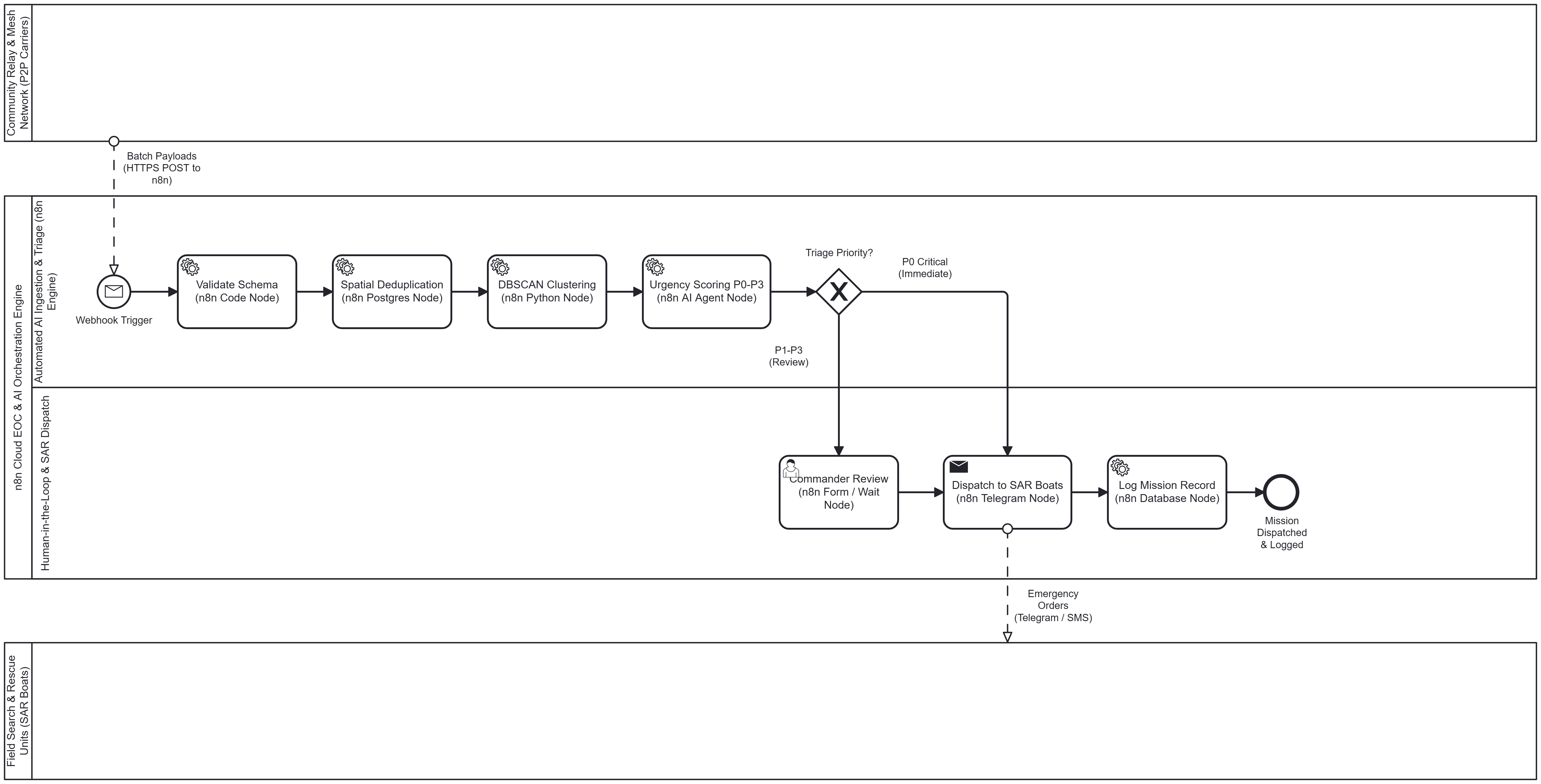
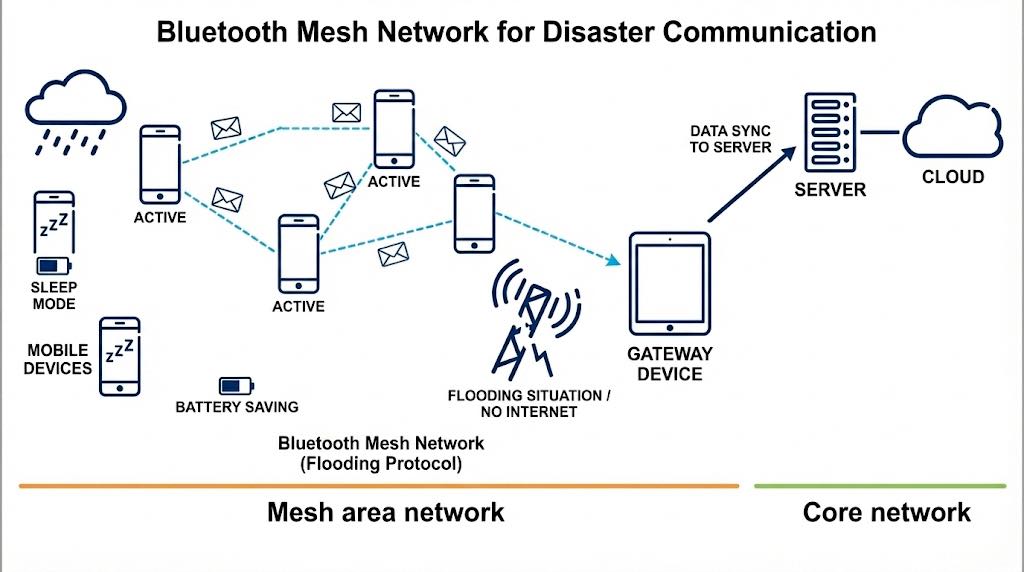
What we did: We designed an offline SOS path that stores alerts on phones, relays them through nearby devices, and hands clean priority lists to rescue teams.
2. Before
3. After
How emergency alerts failed in the field when towers went down.
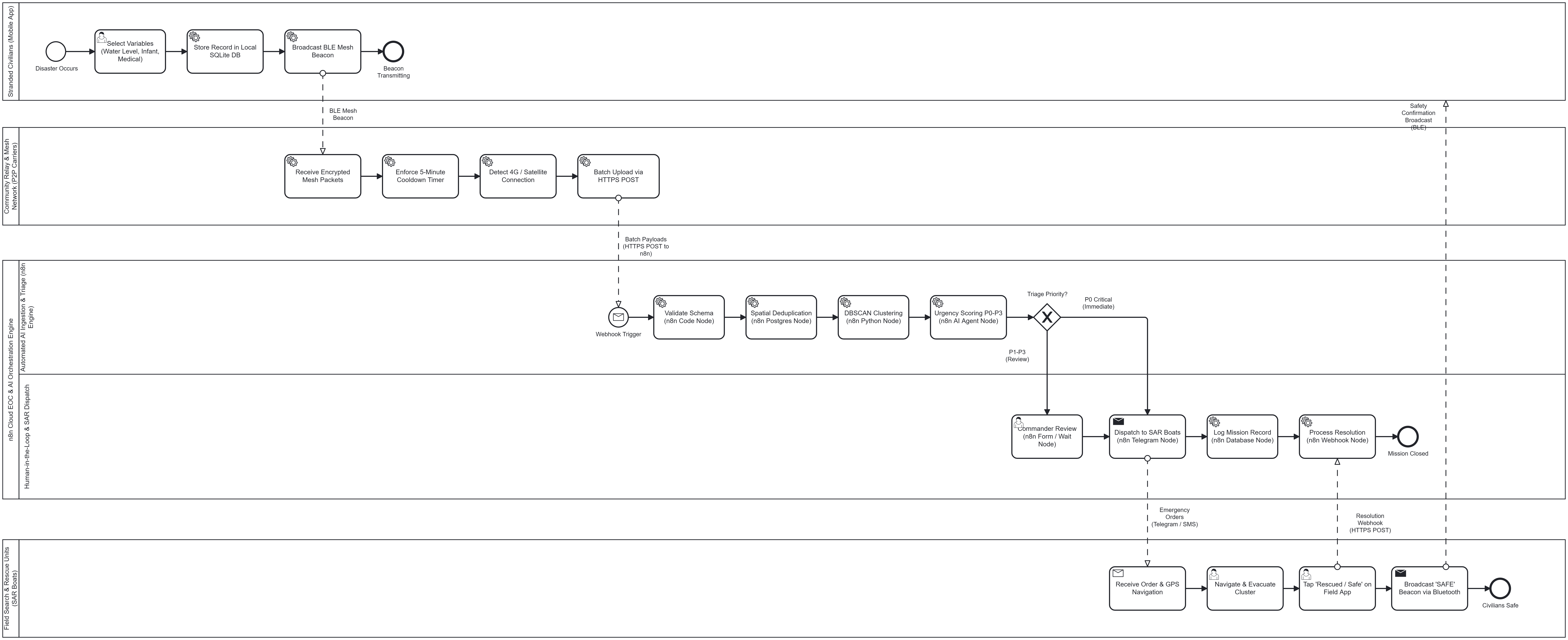
The new path: local SOS save, mesh relay, clean priority lists for rescue teams.
Cell service drops in storms and floods, so standard calls and apps stop working.
Emergency phone lines jam or fail when the network is down.
People post SOS notes across social apps with no shared format or priority.
Rescue boats wait on vague pins, and public maps can expose private home addresses.
- No reliable SOS path when towers fail
- Hotlines jam or go dark during peak demand
- Alerts are scattered across social posts with no shared format
- Rescue boats wait on unclear locations, and public maps can expose private addresses
- SOS is saved locally on the phone with zero cell signal needed
- Nearby devices relay alerts across the disaster zone
- When any phone finds a connection, alerts upload to rescue teams in under 60 seconds
- Command centers get clean priority lists, and private home addresses stay blurred on public maps
4. How it works
The mesh moves SOS packets. Rescue teams stay in control of priority and boat dispatch.
System decides
- Save SOS packages locally when there is no cell signal
- Relay alerts through nearby devices across the mesh
- Group duplicate reports for the same location
- Sort priority lists in under 3 seconds
- Blur private home addresses on public map views
People decide
- Set rescue priority for each cluster
- Dispatch boats and field teams
- Confirm SAFE status once people are reached